
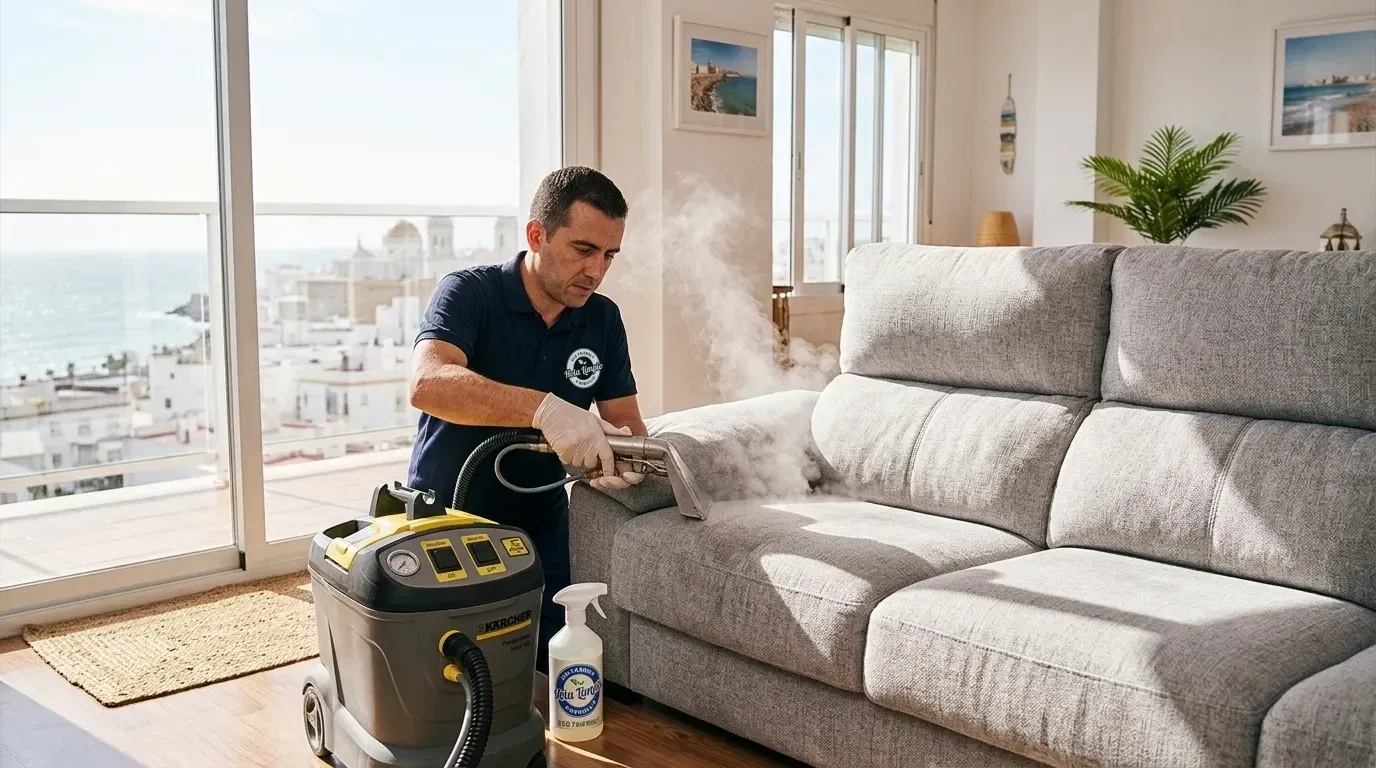
We sit on the sofa every day and spend a third of our lives on the mattress, yet they’re two of the pieces of furniture we clean least. At a glance they can look spotless while quietly collecting dust, dust mites, sweat and crumbs that work their way into the fabric and the filling. In a home on the Cádiz coast, with the humidity that comes off the sea, the problem grows: fabrics soak up moisture and musty smells appear sooner.
The question we’re asked most at Hola Limpio is a simple one: how often should they be cleaned? The answer depends on who lives in the house. In this guide we give you the recommended frequencies, the signs that it’s time for a deep clean and the tricks that keep them fresh for longer.
What builds up in a sofa and a mattress
- Dust mites. They feed on the skin flakes we shed every day and thrive in warmth and humidity. Their debris is one of the most common household allergens and can cause sneezing, itchy eyes or a blocked nose when you wake up.
- Sweat and body oils. Every night the mattress absorbs some of your sweat, and the sofa picks up oils from hands, hair and skin. Over time, yellowish marks and darker patches appear on armrests and headrests.
- Stains and crumbs. Coffee, wine, chocolate or crumbs that slip down between the cushions.
- Pet hair and dander. It catches in the fibres and is hard to remove with a vacuum cleaner alone.
- Moisture. In homes near the sea or with poor ventilation, fabric holds on to moisture and can end up smelling of mould.
How often to clean them: recommended frequency
It’s worth separating maintenance, which you do yourself at home, from a deep clean, which removes the dirt from inside the fabric. Vacuuming should happen every one or two weeks in any home. How often you need a deep clean depends on your household:
| Household | Sofa | Mattress |
|---|---|---|
| Adults, no pets or allergies | Once a year | Once a year |
| With young children | Every 6 months | Every 6 months |
| With dogs or cats | Every 3–6 months | Every 6 months |
| With allergy or asthma sufferers | Every 6 months | Every 6 months, with an anti-mite protector |
| Holiday let | Every 3–4 months | Every 6 months and after any incident |
If you live right on the beach or in a ground-floor flat with little ventilation, bring these dates forward by a couple of months, because humidity encourages dust mites and odours.
In Jerez, further from the sea, the air is less humid, but summers are very hot and we sweat more at night. In those months it’s worth washing the mattress protector every week and airing the bedroom first thing in the morning, when the air is cooler.
Signs it’s time for a deep clean
Even if the date hasn’t come round yet, there are clear signs that your sofa or mattress needs attention:
- It smells stale or damp even after airing the room.
- There are yellowish marks, rings or patches darker than the rest of the fabric.
- You wake up congested, sneezing or with itchy eyes that improve during the day.
- The fabric feels matted or rough, or has lost its original colour.
- A small puff of dust rises when you sit down heavily.
- A pet has had an accident or someone has been sick on it: even when it’s dry on the surface, the smell and bacteria stay in the filling.
How to keep them clean between deep cleans
A good routine makes a deep clean last much longer and holds off stains and odours.
Vacuum every one or two weeks
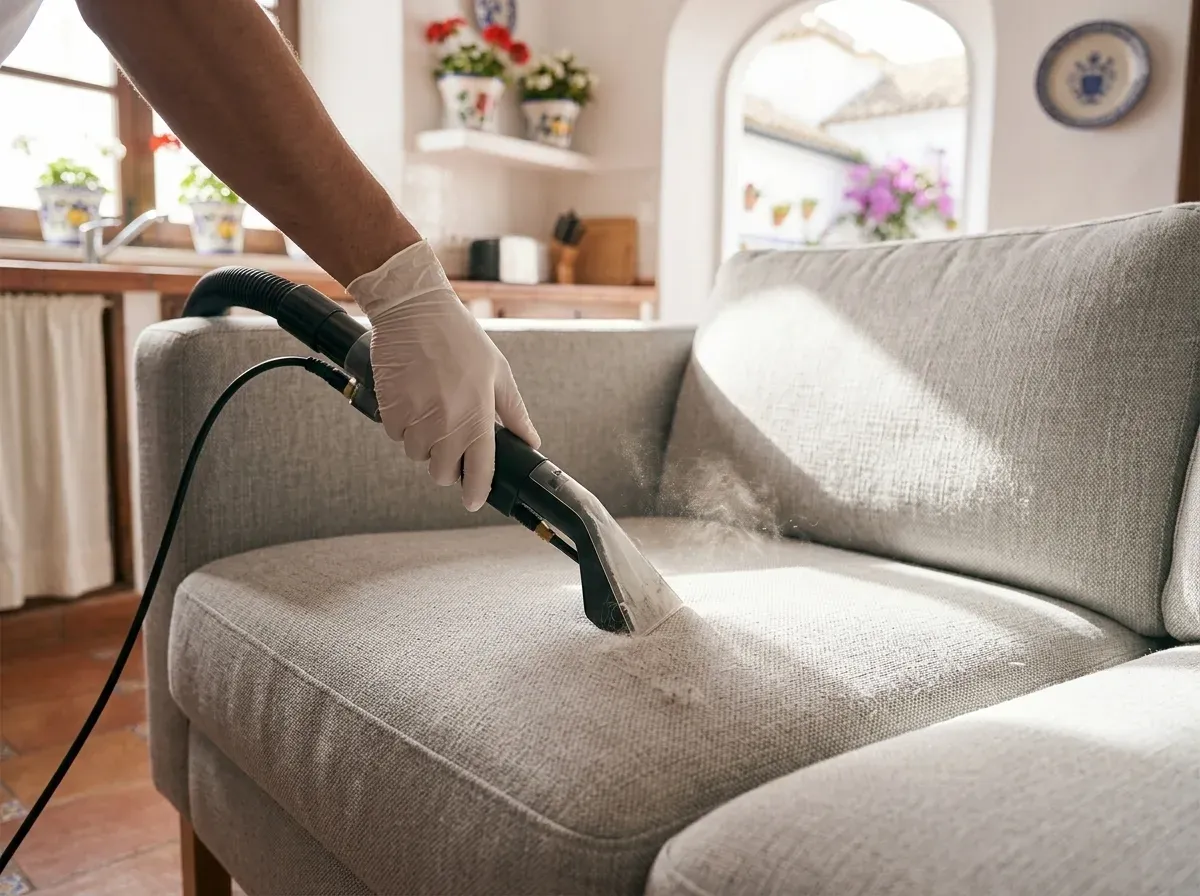
Use your vacuum’s upholstery attachment on the seats, backrests and armrests and, above all, along the seams and between the cushions, where dirt collects. On the mattress, vacuum the top and sides whenever you strip the bed.
Air and rotate the mattress
When you get up, leave the bed unmade for at least half an hour so the moisture from your body can evaporate. Rotate the mattress head to foot every three months and, if it’s double-sided, flip it too. That way it wears evenly and the filling stays firm.
Use protectors and washable covers
A breathable, washable mattress protector is the best investment you can make: washing a protector at 60ºC is far easier than cleaning a mattress. On the sofa, removable covers or a throw on the seat you use most protect the fabric from everyday wear, especially with children or pets in the house.
Deal with stains straight away
When something spills, first lift any solids with a spoon and soak up the liquid by pressing with a white cloth, without rubbing: rubbing spreads the stain and pushes it deeper into the fabric. Then dampen lightly with cold water and a drop of neutral soap, and blot dry again. Always test any product on a hidden area first.
Keep pet hair under control
A damp rubber glove or a lint roller picks up pet hair far better than a vacuum cleaner. If your dog or cat is allowed on the sofa, give them their own throw that you can wash every week.
Neutralise odours
Sprinkling bicarbonate of soda over a dry mattress, leaving it for a couple of hours and vacuuming it up helps reduce mild odours. It’s no substitute for a deep clean, but it’s a handy trick between cleans.
How a professional hot water extraction clean works
Hot water extraction is the most effective way to deep clean fabric upholstery and mattresses. This is how we do it at Hola Limpio:
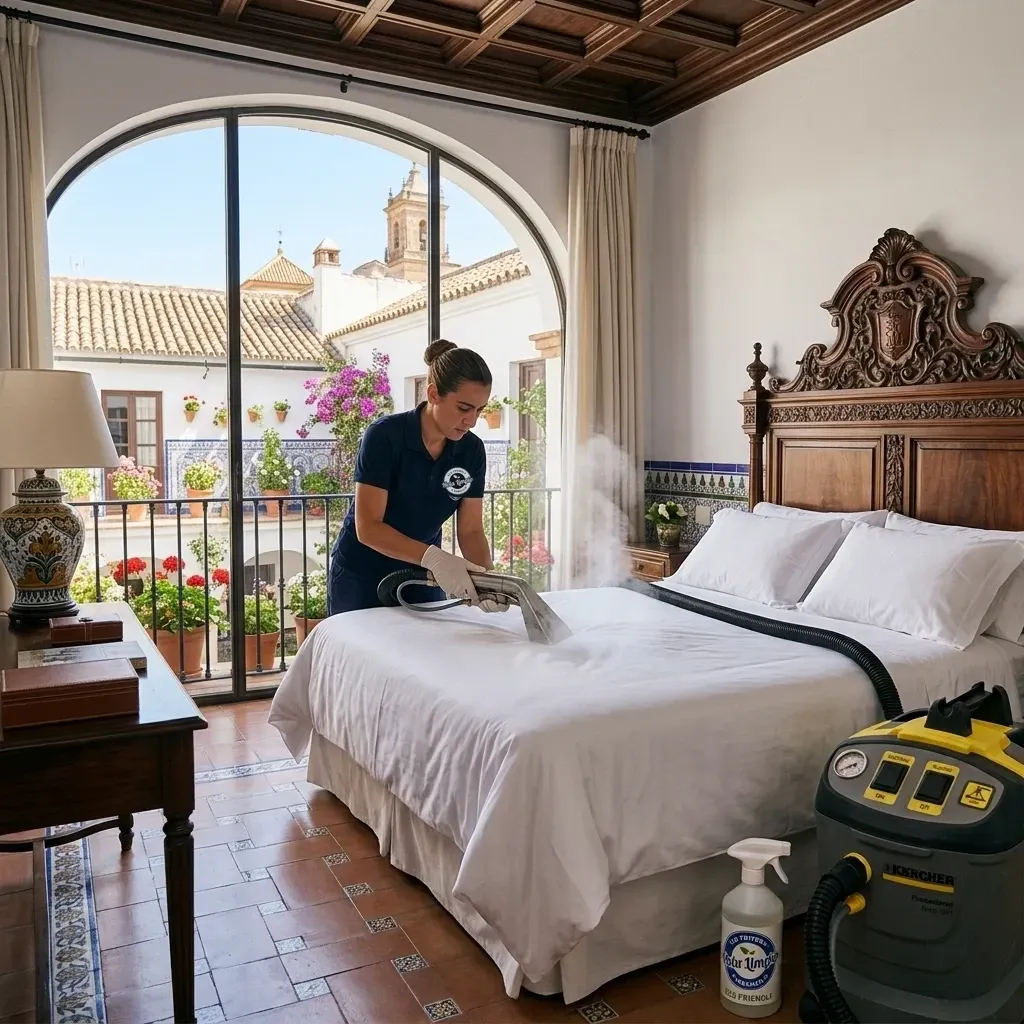
- Fabric check. We read the care label, identify the type of fabric and test the product on a hidden area.
- Thorough pre-vacuum to remove dust, hair and loose debris.
- Stain pre-treatment with the right product for each type of mark.
- Injection and extraction. The machine sprays hot water with a cleaning solution and sucks it straight back up, pulling the dirt out of the fabric and the filling.
- Deodorising and finish. We apply an anti-dust-mite treatment and brush the fabric so it dries evenly.
Your sofa or mattress is left damp, not soaked, and is usually dry within three to six hours with good ventilation. We use products that are safe for homes with children and pets.
On the same visit we can also clean upholstered headboards, dining chairs and rugs, which is usually worthwhile if you have several pieces that need a deep clean.
Common mistakes that damage the fabric
- Soaking the fabric with water or products: the filling takes days to dry and mould can appear.
- Scrubbing stains hard, which spreads them and wears out the fibres.
- Using bleach or harsh stain removers, which discolour and damage the fabric.
- Drying with a hairdryer or direct heat, which can shrink the fabric or set stains.
- Ignoring the care label. W means water-based cleaners are fine; S, solvent-based only; WS, either; and X, vacuum only.
When to call in a professional
If a stain won’t shift, a smell lingers or you notice allergies getting worse at home, a professional clean makes a real difference. At Hola Limpio we offer in-home sofa and mattress cleaning from €49 in Jerez and all along the coast, from El Puerto de Santa María to Rota. If you’d like your car looking like new too, we also offer car upholstery cleaning. Get in touch with a photo of your sofa or mattress and we’ll give you an exact price.
Frequently asked questions
How long does a sofa or mattress take to dry after cleaning?
With a well-done hot water extraction clean, between three and six hours, depending on the fabric, the thickness of the filling and ventilation. That's why we recommend booking a morning slot and leaving the windows open or the air conditioning on.
Is a leather sofa cleaned the same way as a fabric one?
No. Leather shouldn't be soaked: it's cleaned with a dedicated leather cleaner applied with a soft cloth, then treated with a conditioner so it doesn't crack. Hot water extraction is for fabrics.
Does professional cleaning get rid of dust mites?
It significantly reduces dust mites, their debris and the dust built up in the fabric and the top layer of the filling. To keep the effect going, vacuum regularly, air the room and use a mattress protector.