
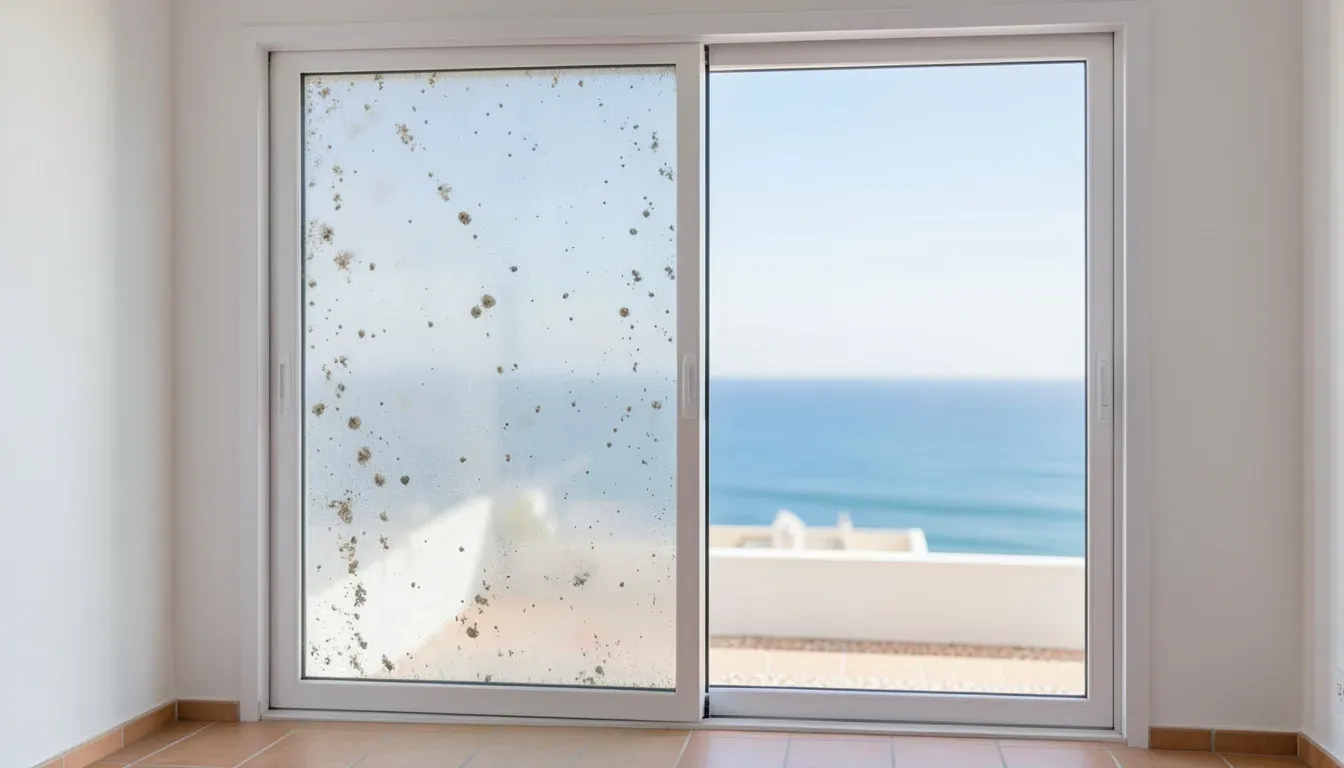
Anyone who lives in El Puerto de Santa María, Rota, Cádiz or Puerto Real will recognise this: you clean the windows on Monday and by Thursday they’re cloudy again; the aluminium railings are covered in tiny white spots, and a single day of Levante wind is enough for sand to find its way through every gap in the house. It isn’t a lack of cleaning. It’s the climate of the Cádiz coast, which combines a salt-laden sea breeze, high humidity for much of the year and one of the strongest winds in Spain.
The good news is that a simple routine and the right products can slow the damage right down. In this guide we explain what sea salt actually harms, how the Levante behaves and the routine we follow at Hola Limpio in the homes we look after around the Bay of Cádiz.
What sea salt is and what it damages
Sea salt, known locally as salitre, is carried by the wind in microscopic droplets and settles on every surface near the sea. When the water evaporates it leaves a whitish film that also attracts moisture from the air. That’s the real problem: damp salt is corrosive and attacks materials little by little, every single day.
These are the parts of a home that suffer most:
- Glass. Salt and limescale form a dull layer that cuts out light and, if rubbed dry, scratches the glass.
- Aluminium. Window frames, sliding doors and railings develop pitting: small white or grey spots that eventually turn into visible corrosion.
- Iron and steel. Railings, gates and screws rust sooner; even stainless steel can show brown marks if it isn’t cleaned.
- Outdoor appliances. The outdoor air-conditioning unit, with its thin metal fins, is particularly vulnerable.
- Fabrics. Curtains, outdoor cushions and awnings soak up salt and humidity, and end up smelling musty or growing mould.
The closer to the sea and the more exposed to the breeze, the sooner the problem appears: a beachfront home in Valdelagrana or Costa Ballena needs far more upkeep than a flat set back in the centre of El Puerto.
The Levante: sand, dust and swings in humidity
The Levante is the easterly wind that funnels through the Strait of Gibraltar and blows hard across the whole province of Cádiz, sometimes for several days in a row. It’s dry, gusty and relentless, and it affects your home in three ways:
- Sand and fine dust. It gets in through the seals of windows and doors, builds up in sliding-door tracks and covers terraces, outdoor furniture and floors.
- A sandpaper effect. As that sand moves around, it scratches glass, floors and polished surfaces. That’s why you should never sweep or scrub hard without removing the loose sand first.
- Sudden changes in humidity. When the Levante drops and the damper westerly Poniente takes over, the salt and dust that have built up get damp and stick to every surface.
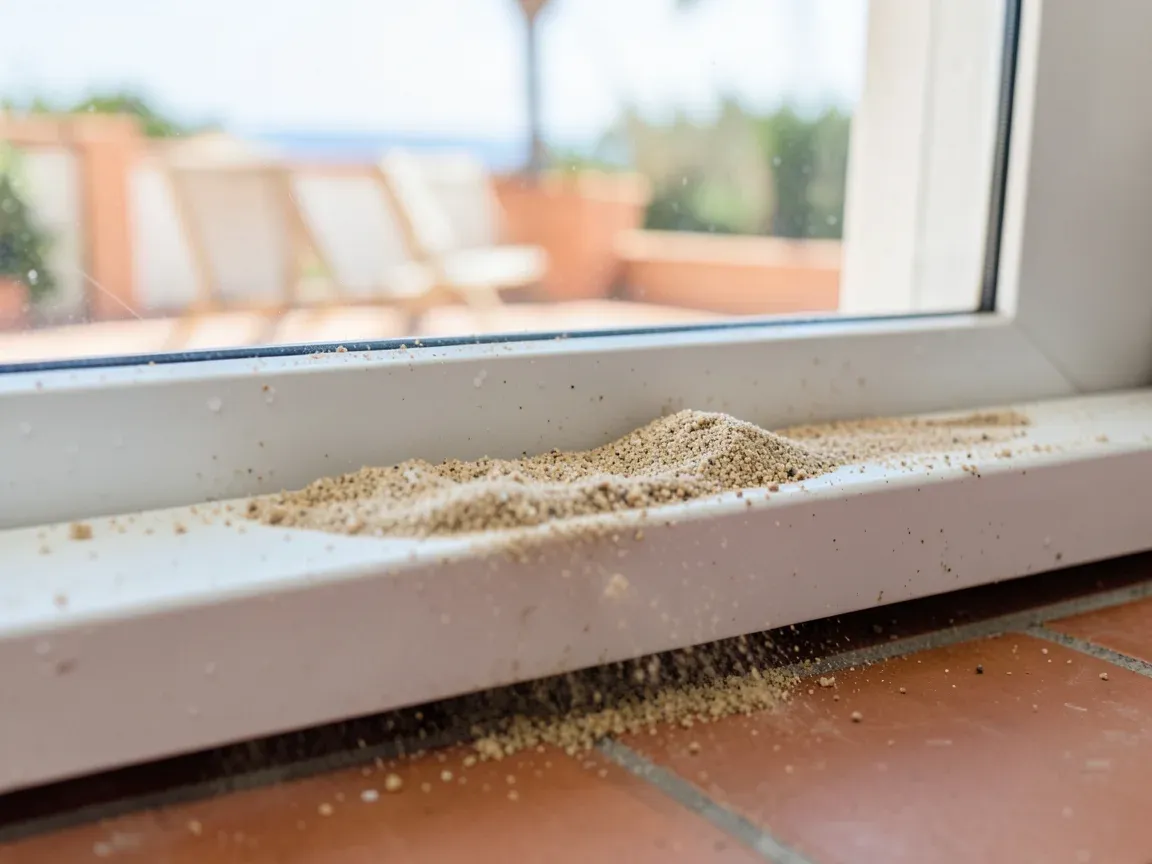
In Jerez, around 12 kilometres inland, sea salt is much less noticeable, but the Levante still brings dust and fine sand. Terraces, ironwork and window tracks need the same attention after every windy spell.
A cleaning routine, area by area
You don’t need a deep clean every week. What makes the difference is consistency and doing things in the right order: first remove the salt and sand, then clean, and finally dry and protect.
Windows and glass doors
- Rinse with fresh water first to dissolve the salt. Never wipe salty glass with a dry cloth: the salt crystals act as an abrasive.
- Clean with warm water and a few drops of washing-up liquid, or with a mix of one part white vinegar to four parts water.
- Remove the water with a rubber squeegee, working from top to bottom, and finish the edges with a microfibre cloth.
- Avoid direct sunlight. If the glass dries too quickly it leaves streaks. Early morning or late afternoon works best.
Window and sliding-door tracks
Always vacuum before you wet them. Pour water onto a track full of sand and you’ll create a paste that clogs the rollers and blocks the drainage holes. After vacuuming, wipe with a damp cloth or a narrow brush, dry thoroughly and, a couple of times a year, apply a little silicone spray to the tracks and seals so the door slides without forcing it.
Aluminium, railings and ironwork
Rinse with fresh water, clean with a neutral soap and a soft sponge, then dry with a cloth. In summer, if you live near the sea, do this every two weeks; in winter, once a month. On iron railings, keep an eye on the paintwork: any spot of rust left to spread will eventually lift the protective coating.
Terraces and outdoor furniture
Sweep or vacuum the sand dry before mopping. Mop with water and neutral soap, including the corners where salt collects. Wipe down chair and table frames with a damp cloth and put cushions away when they’re not in use: overnight damp and salt wear them out sooner than you’d think.
Fabrics, curtains and air conditioning
Wash curtains and nets more often than you would inland, especially those on sea-facing windows. For air conditioning, clean the indoor unit’s filters every two to four weeks during the season and gently rinse the outdoor unit’s fins with low-pressure water, with the system switched off.
Suggested cleaning frequency
| Area | Beachfront home | Inland home or in Jerez |
|---|---|---|
| Exterior glass | Every 1–2 weeks in summer, monthly in winter | Every 3–4 weeks |
| Aluminium and railings | Every 2 weeks in summer, monthly in winter | Every 1–2 months |
| Sliding-door tracks | After every Levante | After every Levante |
| Terrace | Weekly and after every Levante | Weekly and after every Levante |
| Air-conditioning filters | Every 2–4 weeks in season | Every 4 weeks in season |
After a Levante storm, step by step
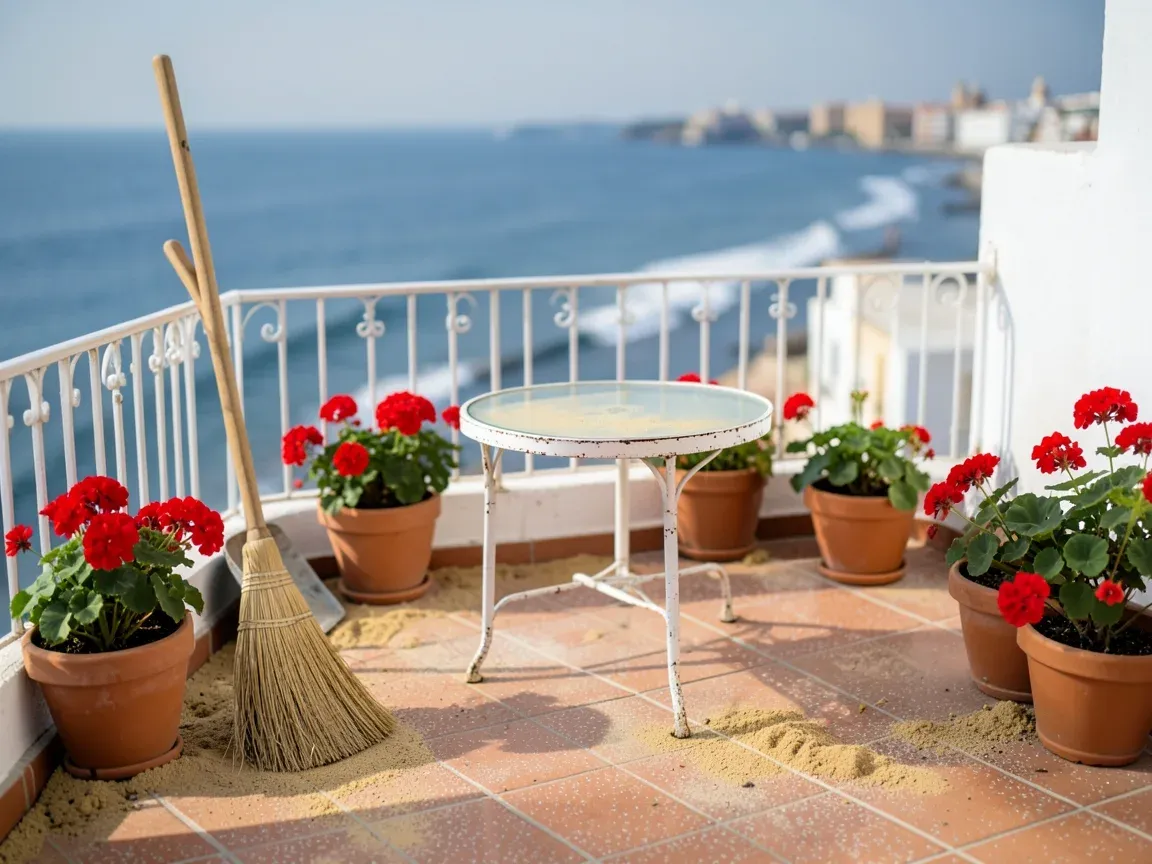
While the wind is blowing, keep windows and doors shut and don’t try to clean outside: the sand will be back within minutes. Once the Levante dies down, follow this order:
- Remove the sand dry. Sweep or vacuum terraces, window sills and tracks before using any water.
- Clear the drains on terraces and balconies so the next rain doesn’t leave muddy puddles.
- Rinse with fresh water railings, aluminium and outdoor furniture to wash off the salt the wind has stuck to the sand.
- Clean the windows using the routine above, starting with the most exposed ones.
- Shake out and wash outdoor fabrics, cushions and terrace rugs.
- Air the house and clean inside, paying particular attention to floors and skirting boards near doors and windows.
If a Levante coincides with guests arriving at a holiday rental, this order matters even more: guests notice sand on the floor and cloudy windows straight away, and it shows up in their reviews.
Common mistakes that speed up the damage
- Rubbing dry glass or surfaces covered in salt and sand: it scratches glass and finishes.
- Using bleach or ammonia on aluminium. They stain and attack anodised and powder-coated finishes; neutral soap is all you need.
- Green scourers or steel wool on frames and railings: they strip the protective layer.
- Pointing a pressure washer at tracks and seals. It forces water and sand into the frames and gaskets.
- Cleaning glass in full sun, which leaves streaks and limescale rings.
- Going months without checking for rust spots on railings and fixings.
When to call in a professional
Sometimes routine cleaning isn’t enough: aluminium with visible pitting, glass that stays cloudy after cleaning, high windows that are hard to reach, or second homes that have been shut up for months. The same goes for holiday lets that need to be perfect between one check-out and the next check-in, whatever the weather.
At Hola Limpio, sea-salt treatment is part of our home cleaning service and our holiday rental cleaning, using the right products for each material. We work all along the coast, from El Puerto de Santa María to Rota and Costa Ballena, as well as in Jerez, where we’re based. If you’d like us to look after your home or get your holiday let ready after a storm, get in touch for a free, no-obligation quote.
Frequently asked questions
How often should you clean the windows of a beachfront home?
In summer, every one or two weeks, because the sea breeze leaves salt behind every day. In winter once a month is enough, plus an extra clean after every strong Levante or Poniente spell.
Does vinegar remove sea salt from glass?
Yes. Diluted in warm water (one part white vinegar to four parts water), it dissolves salt and limescale residue well. Don't use it on anodised aluminium, marble or natural stone, and always rinse with clean water afterwards.
Does sea salt also affect homes in Jerez?
Far less than on the coast, as Jerez is around 12 kilometres inland. There the main problem is the fine dust and sand carried by the Levante, which builds up in window tracks, ironwork and terraces.