
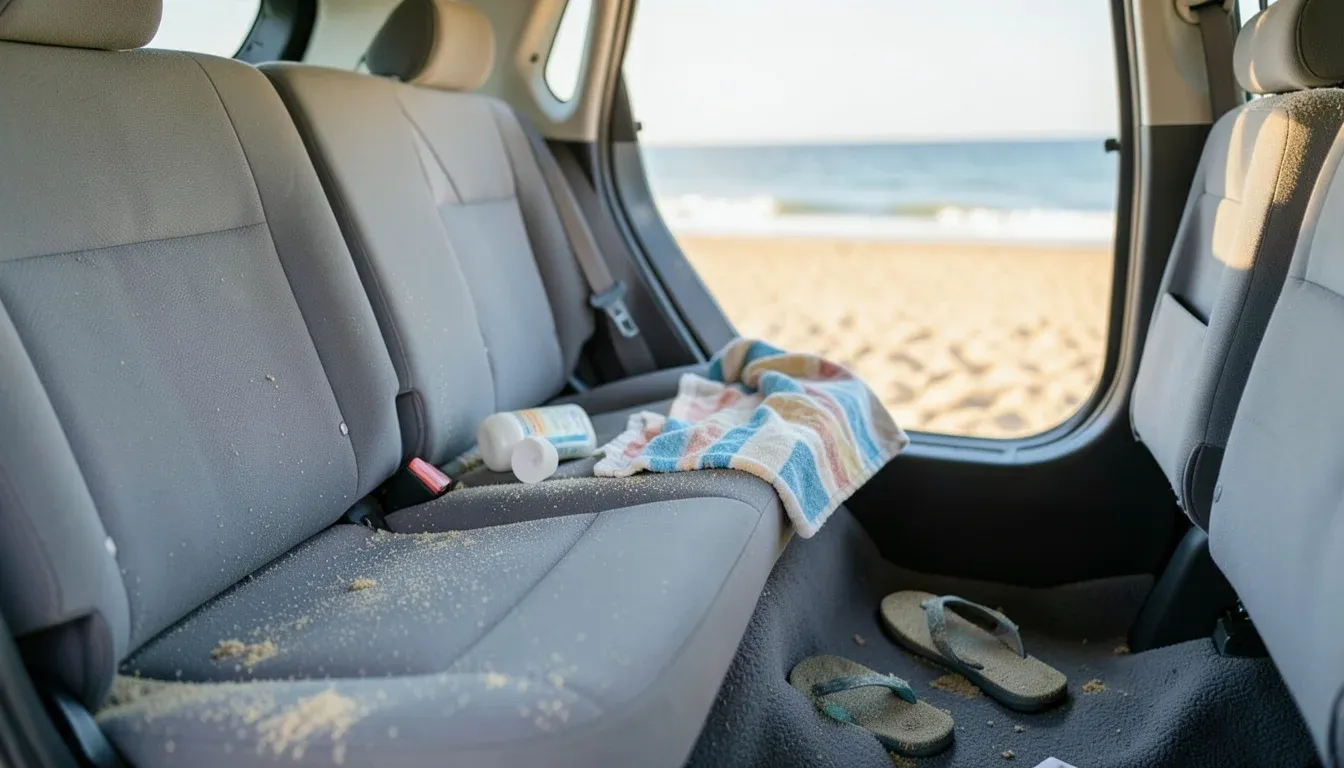
In the province of Cádiz, summer is lived with the car parked by the sand. Valdelagrana beach in El Puerto, La Costilla in Rota, La Victoria or Santa María del Mar in Cádiz, Camposoto in San Fernando: they all have one thing in common, which is that by the end of the day half the beach has come home in the car. Sand in the mats, wet towels on the back seat, sun cream stains on the upholstery and that damp smell that appears in September.
If you’ve reached the end of the summer and your car looks like a different one, don’t worry: most of these problems can be sorted at home with a bit of patience. In this guide we explain how to clean each kind of beach dirt and what to do so it doesn’t happen again next summer.
Why sand, salt and sun cream damage upholstery
It’s not just about how it looks:
- Sand is abrasive. Every time you sit down, the grains rub against the fibres of the fabric and carpet and wear them down. Over the months, the upholstery fades and frays.
- Salt attracts moisture. Seawater that dries on the seats leaves salt crystals that absorb moisture from the air, form white rings and keep the fabric damp.
- Sun cream is greasy. It stays in the fabric, attracts dirt and, with the heat of a car parked in the sun, oxidises and turns yellow.
- Wet towels and swimsuits soak into the seat foam. Inside a closed car at 50 degrees, that moisture is the perfect breeding ground for bad smells and mould.
Step 1: get all the sand out
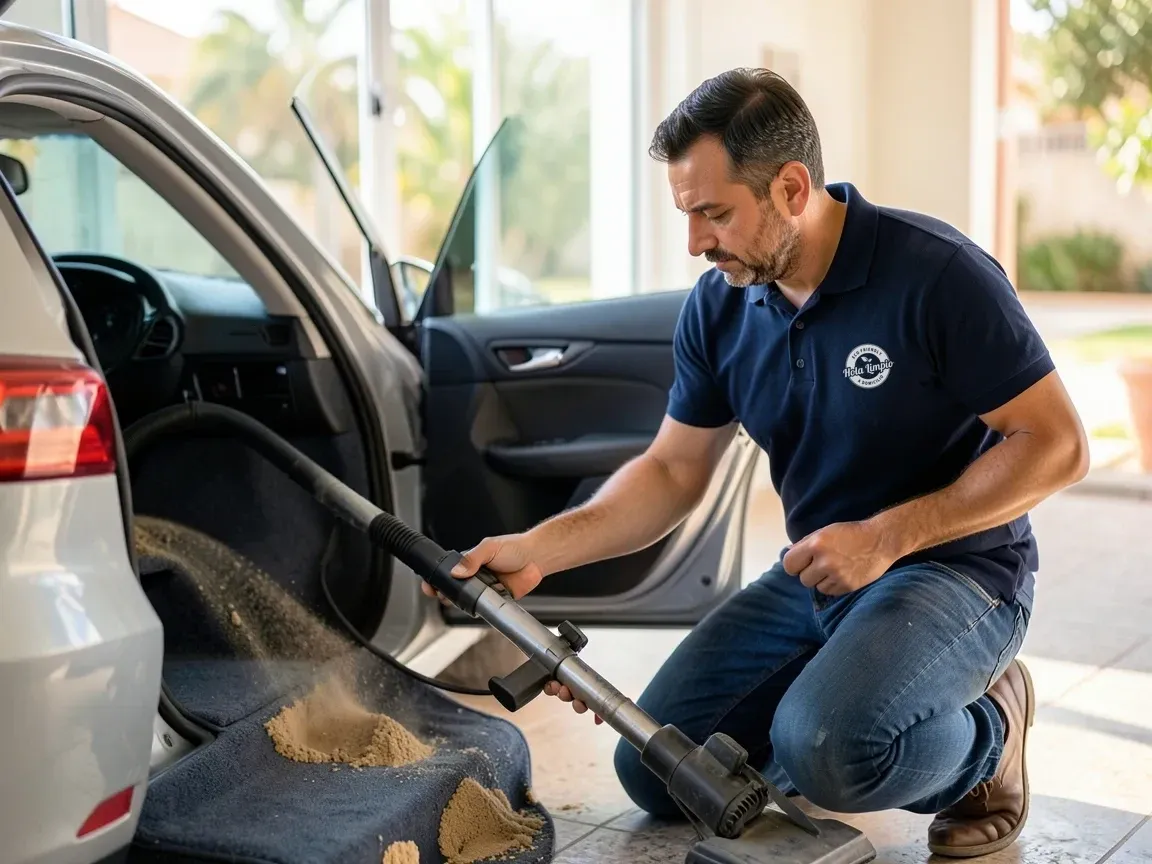
Sand has to come out before anything gets wet, because with water it turns into mud and works its way in deeper.
- Take out the mats and beat them against the ground or a wall. If they’re rubber, wash them with a pressure washer and leave them to dry in the sun.
- Brush the carpet and seats with a stiff-bristled brush, in several directions, to loosen the grains from the fibres.
- Vacuum slowly with the crevice tool, going over each area several times. The seams of the seats, the seat rails and the gaps between the seats and the centre console are where most of it collects.
- Use air if you have a compressor or a blower: blow the sand out of the corners to where you can vacuum it up.
- The boot too: lift the boot carpet and vacuum the spare-wheel well, where sand and moisture build up.
Step 2: remove salt and white rings
White rings on fabric seats and carpets are usually salt. To remove them:
- Dampen a microfibre cloth in warm water, ideally distilled if the water in your area is very hard.
- Press it onto the ring without rubbing, working from the outside in, to dissolve the salt.
- Dry by pressing with another clean cloth and leave the doors open so it airs.
- Repeat if necessary. Don’t soak the seat: water that reaches the foam takes days to dry.
Step 3: get rid of sun cream stains
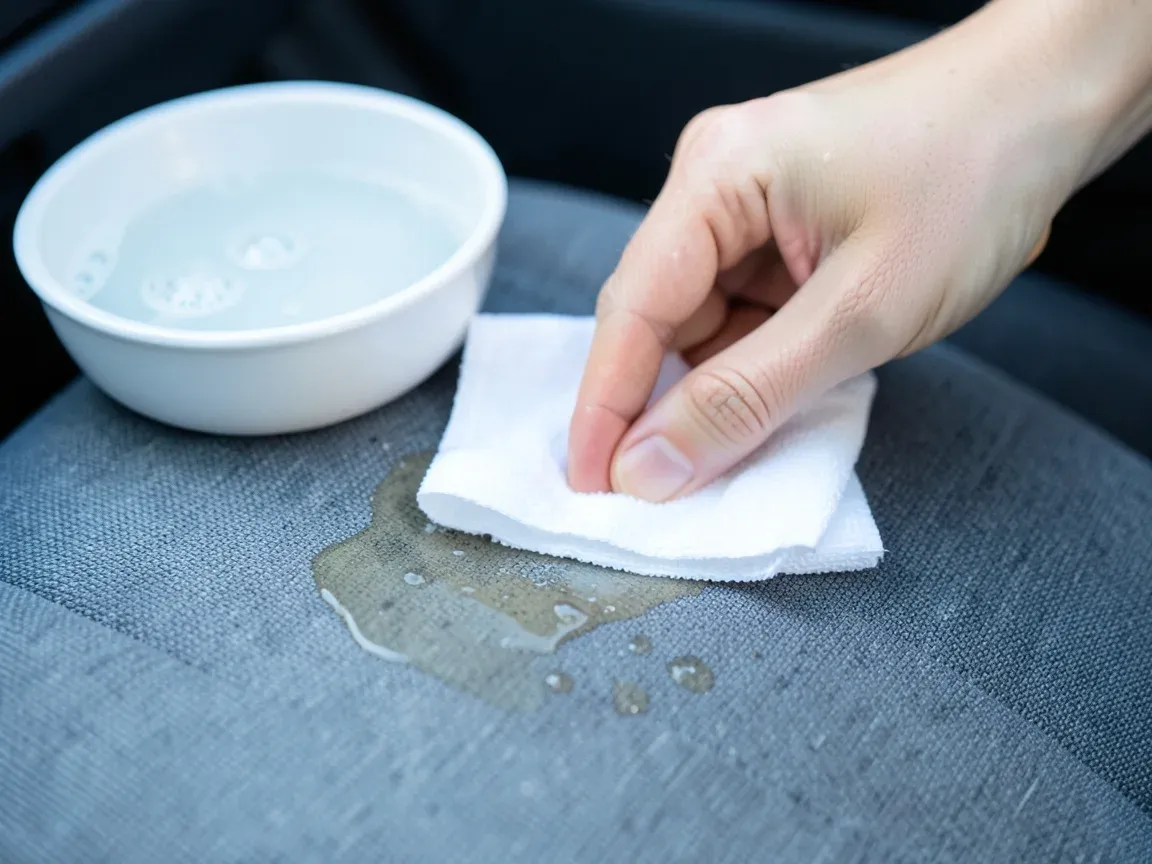
The sooner the better. A sun cream stain from yesterday almost always comes out; one that’s been sitting in the sun for two months is much harder.
On fabric seats:
- Remove the excess with kitchen paper, blotting without rubbing.
- Mix warm water with a few drops of washing-up liquid, which dissolves grease.
- Apply with a cloth, dabbing from the outside in so the stain doesn’t spread.
- Rinse with another cloth dampened with plain water and dry by pressing.
- If a ring remains, repeat and leave to dry with the windows open.
On leather seats:
Sun cream dries out and stains leather. Clean it with a dedicated leather cleaner or with water and neutral soap, dry it well and apply a conditioner to restore its moisture. Avoid alcohol, bleach and multi-purpose cleaners, which make it crack.
Step 4: deal with damp and smells
- Leave the car open for a few hours in a garage or in the shade with good ventilation.
- Sprinkle bicarbonate of soda over the carpet and fabric seats, leave it overnight and vacuum it up in the morning. It absorbs smells and moisture.
- Check the spare-wheel well and under the mats: if there’s water, dry it completely.
- Change the cabin filter if the smell comes out of the air-conditioning vents.
If the smell is still there after all this, the moisture has reached the seat foam or the underside of the carpet. The solution then is an injection-extraction clean, which sprays hot water with a cleaning product into the fabric and extracts it along with the dirt, leaving the seat almost dry.
Mistakes that make upholstery worse
When you’re rushing back from the beach, it’s easy to make worse something that could have been fixed:
- Wetting before vacuuming. Wet sand turns into mud and gets ground into the carpet.
- Rubbing stains. It spreads the sun cream and salt and opens up the fibres of the fabric. Always dab.
- Using too much water or foaming products. Water that reaches the seat foam takes days to dry and leaves bigger rings than the original stain.
- Multi-purpose cleaners or bleach on fabric or leather seats: they discolour and dry out the material.
- Leaving the car shut in the sun with damp upholstery. It’s the recipe for a musty smell and mould.
- Forgetting the seat belts. They collect sun cream, sweat and salt. Clean them by pulling them all the way out, using water and neutral soap, and leave them to dry fully extended before letting them retract.
- Putting the clean off until winter. Sun cream stains and salt rings set in the summer heat, and what came off with a cloth in August needs a machine by November.
How to prevent it next summer
- A towel or cover on the seats for the drive home from the beach, and another in the boot for wet things.
- Rubber mats in summer: the sand shakes off in seconds.
- Talcum powder on your skin before getting into the car: the sand falls off instantly.
- A bucket or bag for wet swimsuits and towels.
- A small brush in the glovebox to brush off feet and flip-flops before getting in.
- Don’t leave damp towels in the car overnight.
In-home car upholstery cleaning
If you’d rather not spend the afternoon with the vacuum cleaner, at Hola Limpio we come to your home or workplace with professional injection-extraction machines. We clean seats, carpets, boot and headlining, removing embedded sand, salt rings, sun cream stains and smells, and leave the car ready for winter. You can see everything that’s included in our car upholstery cleaning service.
We work in Jerez, El Puerto de Santa María, Rota, Cádiz city and Puerto Real. If your sofa or mattresses at home have also suffered over the summer, you’ll want to know how often to clean your sofa and mattress. Get in touch and we’ll give you a free, no-obligation quote.
Frequently asked questions
How do I get sand that's stuck in the car carpet out?
First brush the carpet with a stiff-bristled brush to loosen the grains, then vacuum slowly in several directions with the crevice tool. Beating the mats outside the car before vacuuming them saves a lot of work.
Do sun cream stains damage upholstery permanently?
If they're treated early, usually not. Sun cream is greasy, so it comes out by blotting with kitchen paper and cleaning with warm water and a few drops of washing-up liquid. With heat and time it soaks into the fabric and oxidises, and then a professional clean is usually needed.
Why does my car smell damp after the summer?
Almost always because of towels, swimsuits or wet sand that have soaked the carpet and seats. Moisture trapped under the upholstery, combined with the heat, encourages mould and bacteria. The fix is to dry everything, vacuum and, if the smell lingers, an injection-extraction clean.