
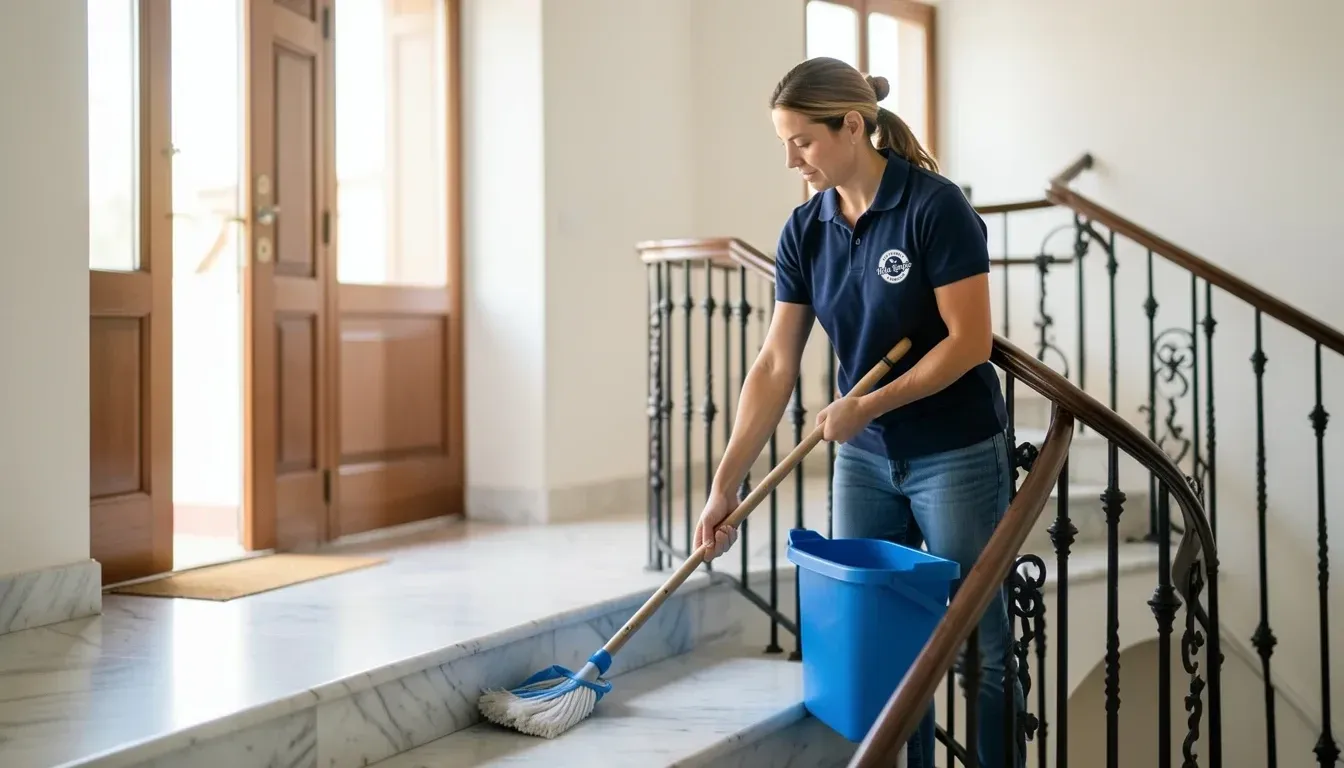
A clean entrance hall is the first impression of the whole building. It’s what residents see every day, what visitors see and, when the time comes, what anyone viewing a flat for sale or rent sees. And yet in many residential buildings in Jerez, cleaning is a topic that drags on from one residents’ meeting to the next: the stairs aren’t mopped properly, the glass in the entrance has looked the same for months, nobody came in August.
Whether you’re the president of your residents’ association or a property manager, this guide will help you know what a good cleaning service should include, how often, and what to ask before you sign.
What community cleaning includes
Regular cleaning of a residential building covers all the shared areas used every day. A complete service usually includes:
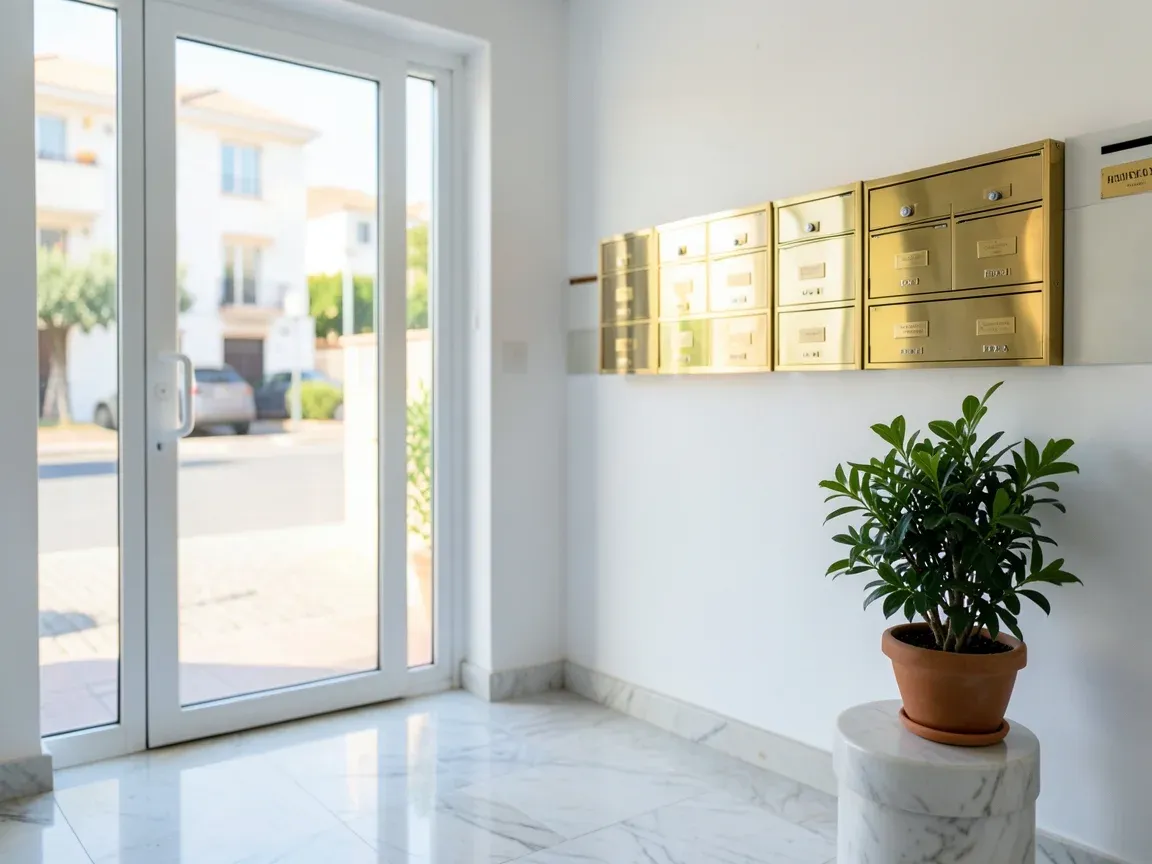
- Entrance hall: sweeping and mopping the floor, doormats, letterboxes, the entrance doors and glass, and the doorbell and intercom panel.
- Stairs and landings: sweeping and mopping, handrails, banisters and skirting boards.
- Lift: floor, walls, mirror, buttons and doors inside and out. It’s the most-touched area and the one that gets dirty fastest.
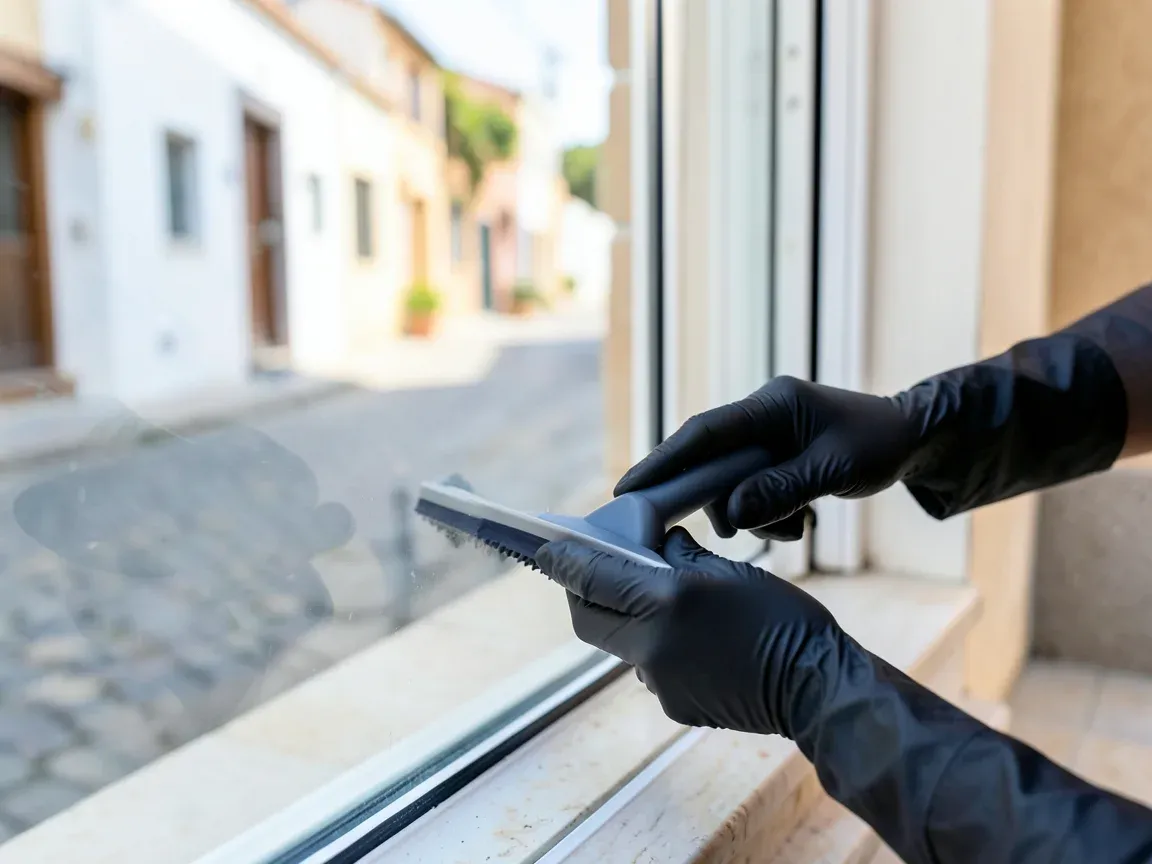
- Glass in the entrance, light wells and stairwell windows that can be reached from inside.
- Light fittings, switches and push buttons in the shared areas.
- Bin and meter rooms, if the building has them.
- Courtyards, roof terraces and garden areas, swept and free of leaves and debris.
- Garage and storage rooms, with regular sweeping and a deep clean from time to time.
As well as the daily or weekly cleaning, it’s worth scheduling deep cleans once or twice a year: polishing the entrance floor, hard-to-reach glass, ceilings, light fittings and the garage with a floor-scrubbing machine.
How often to clean, by type of building
There’s no single frequency: it depends on how many flats there are, whether there’s a lift, whether there are children or pets and whether the entrance opens onto a busy street.
- Small building or traditional casa de vecinos (up to twelve flats, no lift): one visit a week is usually enough, with two in winter if mud comes in from the street.
- Medium-sized block (twelve to thirty flats, with a lift): two or three visits a week, with the lift and entrance hall on every visit.
- Large block or development (more than thirty flats, several entrances, garage or pool): a daily or near-daily service, with a schedule of tasks by area.
In Jerez, many buildings from the seventies and eighties have entrance halls with terrazzo or marble floors and long staircases, with no lift in some entrances. In the town centre, traditional buildings arranged around a courtyard also need care for the tiles and traditional floors; we explain how in our guide to cleaning Andalusian tiles and patios.
Products and surfaces: what not to do
Many entrance halls in the province have marble or terrazzo floors. They’re hard-wearing, but acidic products such as vinegar, limescale removers or cleaners containing hydrochloric acid attack the stone and dull it within weeks. The right approach is a neutral soap and, during deep cleans, crystallising or polishing with a machine.
Other common mistakes:
- Mopping the stairs with too much water, which takes a long time to dry and causes slips.
- Using bleach in the lift, which stains stainless steel and damages the panels.
- Not putting out wet-floor signs, with the risk of falls and claims.
- Always cleaning at rush hour, when residents are leaving for work or school.
An example weekly plan
For a medium-sized block in Jerez, with one entrance, a lift and five floors, a typical cleaning plan might look like this:
- Monday: the whole entrance hall, the lift, letterboxes and the glass in the front door. After the weekend is when it shows most.
- Wednesday: sweeping and mopping stairs and landings on every floor, handrails and banisters, plus the lift and entrance again.
- Friday: entrance and lift, bin room, courtyards and a wipe of switches and push buttons.
- Once a month: stairwell and light-well glass, skirting boards, the outside of the landing doors, light fittings and reachable ceilings.
- Every three to six months: the garage with a floor-scrubbing machine, a deep clean of the entrance floor and a check of areas that get a little dirty but never cleaned, such as the meter room or the roof access.
This schedule is adjusted to the building: more visits if there’s heavy footfall or pets, fewer for a small community. What matters is that it’s in writing and that any resident can find out what gets cleaned each day.
Hiring a person or a company
Some buildings still hire a person directly to do the cleaning. It’s a valid option, but it’s worth knowing that the community becomes an employer: it must register them with Social Security, handle payroll and cover holidays and sick leave. When that person is ill or on holiday, the building goes uncleaned.
With a cleaning company, the community pays a monthly invoice and the company takes care of everything else: staff, cover, products, equipment and insurance. It’s the option most property managers choose because it makes administration simpler.
What to ask before hiring
To compare quotes fairly, ask every company for the same level of detail:
- A list of tasks by area and how often each one is done.
- Days and times of the visits.
- What happens during holidays and sick leave: the right answer is that the person is replaced at no extra cost.
- Current public liability insurance.
- Staff who are properly registered and trained in the use of products.
- Products and equipment included in the price.
- Deep cleans included or quoted separately.
- A direct contact channel for issues, by phone or WhatsApp, with a quick response.
- Trial period or minimum term: a good service doesn’t need to tie you into a long contract.
How to tell whether the service is working
- Residents stop complaining in the building’s WhatsApp group.
- The entrance and the lift are clean on Mondays too, not just on the day of the visit.
- The glass in the entrance doesn’t collect marks for weeks.
- The company reports any damage it spots, such as a blown bulb or a loose tile.
- When there’s an issue, someone replies the same day.
Community cleaning in Jerez and around the Bay
At Hola Limpio we look after the cleaning of residential buildings in Jerez de la Frontera and around the Bay of Cádiz, from traditional buildings in the town centre to blocks with several entrances and a garage. We work to a written schedule of tasks, with guaranteed cover, public liability insurance and a direct WhatsApp contact for the president or the property manager.
You can see what’s included in our residential community cleaning service. We also work in Puerto Real, El Puerto de Santa María and Cádiz city. Get in touch with the number of flats and entrances and we’ll prepare a detailed quote to present at your next residents’ meeting.
Frequently asked questions
How often should a residential building be cleaned?
It depends on the size and how much it's used. A small building of up to twelve flats usually works well with one or two visits a week; a large block with lifts and a garage needs three or more. The entrance hall and the lift are the areas that get dirty first.
Is it better to hire a person or a cleaning company?
Hiring a person directly makes the community their employer: it has to register them with Social Security and handle payroll, holidays and sick leave. With a company, all of that is the company's responsibility, and the community simply pays a monthly invoice for a guaranteed service.
Who decides to change the building's cleaning company?
Usually the residents' meeting (junta de propietarios), on the proposal of the president or the property manager. It's worth asking for several quotes with the same level of detail on tasks and frequency so they can be compared.