
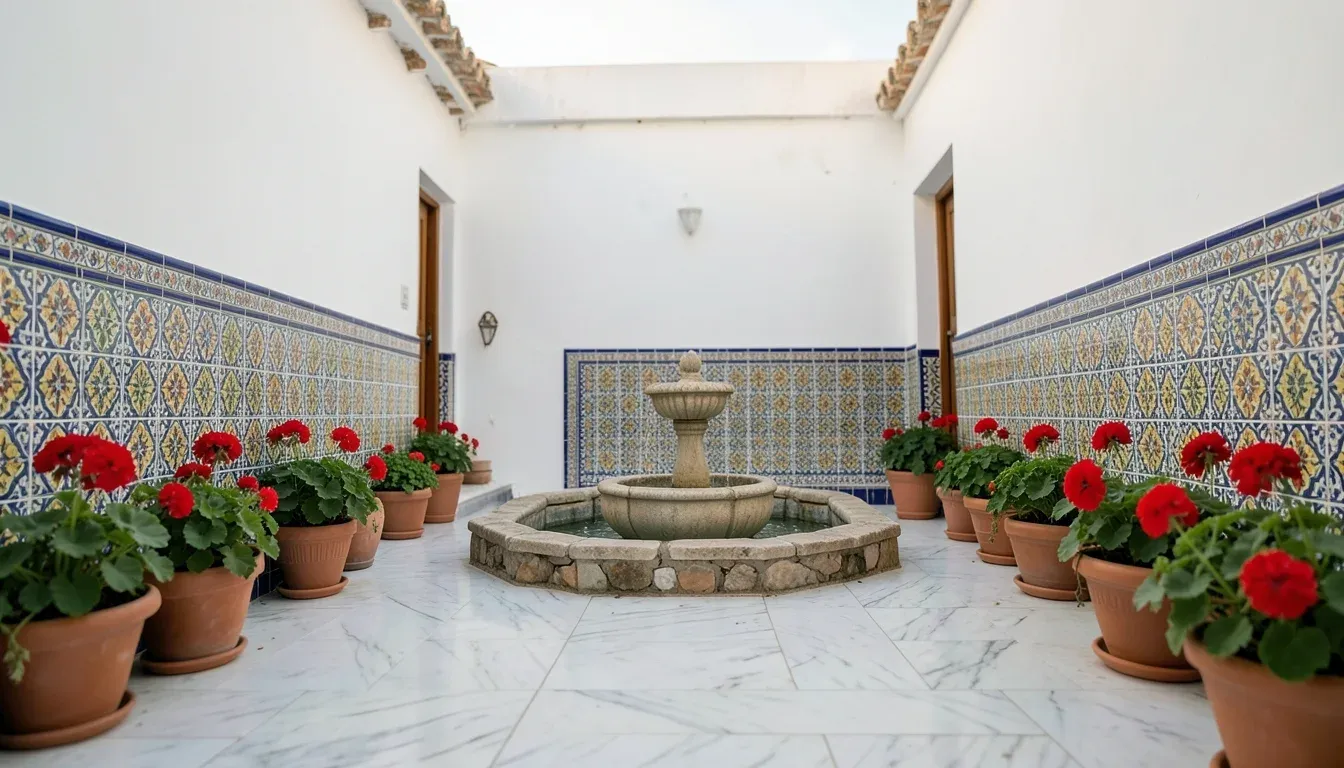
Few things are as typically ours as an Andalusian patio: the tiled dado along the walls, the terracotta or marble floor, the pots of geraniums and, in the houses with the most history, a fountain in the middle. Jerez still has hundreds of patio houses in the neighbourhoods of its historic centre, and in Cádiz city the traditional casas de vecinos are built around light wells with floors and tiles that are more than a century old.
These materials are beautiful and hard-wearing, but they aren’t cleaned like modern porcelain tiles. The wrong product can dull marble, permanently stain an encaustic cement tile or strip the protection from a terracotta floor. In this guide we explain how to clean every surface in a patio and a traditional house without damaging it.
Before you start: identify the material
Each material needs different treatment, so the first step is knowing what you have:
- Glazed tile. A ceramic tile with a shiny layer of glaze. It’s the tile used on dados, in old kitchens and on façades. The glaze is tough; the grout, less so.
- Encaustic cement tile (baldosa hidráulica). A cement tile with coloured patterns, very common in early twentieth-century houses. It’s porous and sensitive to acids.
- Terracotta (barro cocido). A warm, reddish and very porous tile. It absorbs stains if it isn’t treated.
- Marble. Common in patios, staircases and entrance halls. It’s a limestone: acids attack it and leave it dull.
If you’re not sure, always test a product first somewhere out of sight, such as a corner or behind a plant pot.
Old tiles: cleaning without damaging the glaze
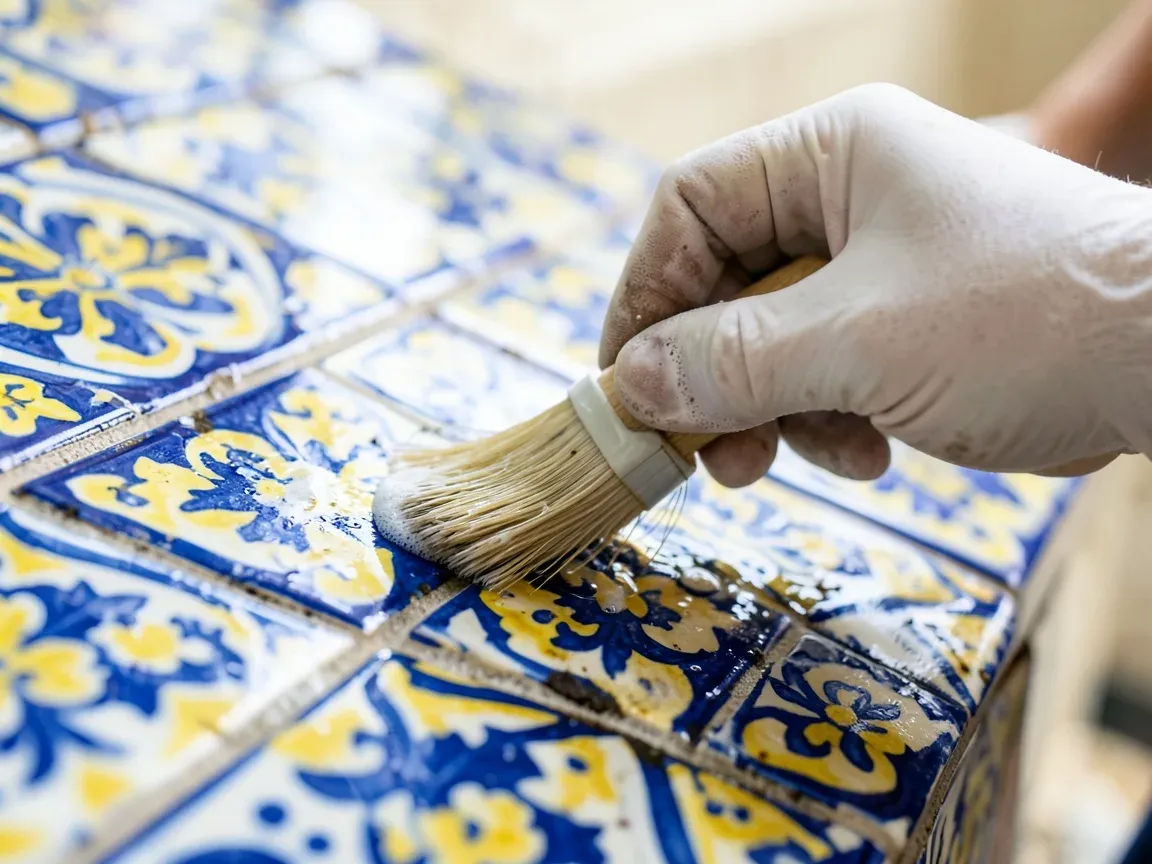
Dado tiles collect dust, grease in kitchens and, in patios, traces of soil and limescale.
- Remove the dust dry with a microfibre cloth or a duster.
- Wash with warm water and a neutral soap, applied with a soft sponge or a soft-bristled brush. No green or metal scourers: they scratch the glaze.
- Grout: a paste of bicarbonate of soda and water with an old toothbrush. If it’s very black with mould, heavily diluted bleach on the grout only, rinsing straight away.
- Rinse and dry with a clean cloth so no limescale marks are left.
On tiles with crazed or chipped glaze, water and products soak into the clay underneath. Clean them with a barely damp cloth and no products, and avoid rubbing loose edges.
Encaustic cement floors: acid is the enemy
Encaustic tiles are made of cement, and cement reacts with acids. Vinegar, lemon, limescale removers and cleaners containing hydrochloric acid eat into them and strip the colour for good.
- Routine cleaning: water with a neutral soap, with the mop well wrung out.
- Grease stains: concentrated neutral soap or a little washing-up liquid, scrubbed with a soft brush.
- Protection: once treated with a dedicated sealer or wax, the tile resists stains better. The treatment is renewed from time to time depending on use.
- Bleach, ammonia and hydrochloric acid: always avoid them.
Terracotta: cleaning and protecting
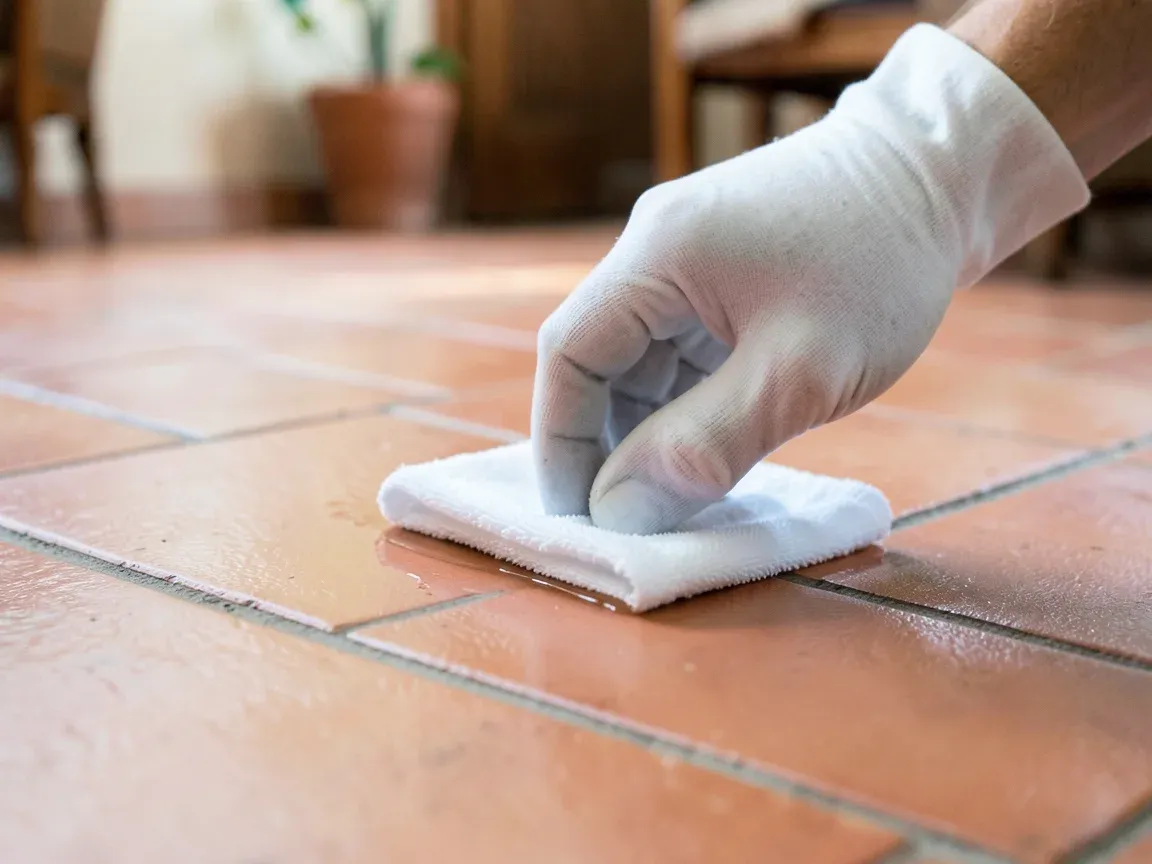
Terracotta is warm and lovely, but very porous. Untreated, it soaks up water, oil stains and dirt.
- Sweep or vacuum often: sand and soil wear down the surface.
- Mop with water and neutral soap, using little water, and let it dry with good ventilation.
- Protection: a wax or oil made for terracotta, or a water-repellent sealer, applied to the clean, dry floor. Renew it when water stops beading.
- White marks: usually efflorescence, salts rising with ground moisture, very common on ground floors around the Bay. Brush them off dry. Wetting them only makes them come back.
Marble in patios, staircases and entrance halls
- Routine cleaning with water and a pH-neutral soap. No vinegar, lemon, limescale remover or concentrated bleach.
- Wipe up spills straight away: coffee, wine or juice are acidic and leave dull rings within minutes.
- Plant pots: stand them on feet or raised saucers. Irrigation water with soil leaves rust stains on marble that are very hard to remove.
- Shine: when marble loses its shine, the answer is professional machine polishing or crystallising, not more product.
The whole patio: fountain, plant pots and whitewashed walls
- Fountain: empty it, brush off the limescale and algae with water and rinse well. Avoid acidic limescale removers if the fountain or the floor around it is marble.
- Plant pots and planters: remove dry leaves and clean the saucers so water doesn’t stand and attract mosquitoes.
- Whitewashed walls: lime isn’t scrubbed. If it gets dirty, brush off the dust dry and apply a fresh coat of lime, as has always been done in Andalusian patios before spring.
- Grilles and gates: water with neutral soap and, if the salt has rusted them, a dedicated treatment before painting. There’s more in our guide to protecting your home from sea salt and the Levante wind.
A patio maintenance calendar
A well-kept patio doesn’t need big cleans if it’s looked after consistently. This is the routine we recommend for patio houses in Jerez and the old town of Cádiz:
- Every week: sweep the floor, remove dead leaves and flowers, empty the plant-pot saucers and wipe the tiled dado at hand height.
- Every month: mop the floor with neutral soap, clean the fountain, check the grout on the tiles and clean grilles and gates.
- In spring: a deep clean before patio season, whitewashing the walls if needed and renewing the wax or sealer on the terracotta. It’s when the patio is enjoyed most, with the flowers at their best and meals outdoors.
- At the end of summer: remove the dust and salt that have built up, check whether the sun has worn down the floor treatment and get the patio ready for the rain.
- In winter: keep an eye on damp on the ground floor, dry puddles after rain and stop water from standing against the walls.
With this routine, the patio keeps its looks for years and deep cleans come down to one or two a year.
The most common mistakes
- Using vinegar for everything. It’s a good cleaner for glass and taps, but it ruins marble and encaustic tiles.
- Mixing products to make them clean better: as well as being dangerous, it leaves residues that damage surfaces.
- Mopping porous floors with lots of water, which then take days to dry and end up stained.
- Scrubbing old tiles with hard scourers.
- Painting or sealing over a damp floor, which traps the moisture and lifts the treatment.
When it’s worth calling a professional
If the floor is badly worn, the marble has lost its shine or there are old stains that won’t shift, a deep clean with machinery and specialist products is worth it. At Hola Limpio we look after traditional houses in Jerez and the old town of Cádiz city as part of our residential home cleaning service, and patios and shared areas in traditional apartment buildings with our residential community cleaning service.
If your house also suffers from damp in winter, you’ll find our guide to damp and mould useful. Get in touch, tell us what floors and tiles you have, and we’ll advise you with no obligation.
Frequently asked questions
Can I use bleach on old tiles?
Diluted bleach doesn't usually harm the glaze itself, but it can discolour and weaken the grout and affect tiles whose glaze is crazed. For routine cleaning a neutral soap is better, keeping heavily diluted bleach for occasional mould spots.
Why do white marks appear on a terracotta floor?
They're usually efflorescence: salts carried up by water from inside the material, left on the surface when it evaporates. Brush them off dry and, if they keep coming back, check for damp in the floor before treating it.
How often does a terracotta floor need treating?
It depends on use, but in a patio or kitchen renewing the wax or sealer once or twice a year is usually enough. If water stops beading and starts darkening the tile, it needs a new treatment.